How to light a wood-fired sauna stove, step by step
Lighting a wood-fired stove in a barrel sauna: preparation, stacking logs, air supply, topping up and the mistakes that cost you temperature.
Read →The chimney is the only part of the sauna where a mistake ends in a fire rather than an inconvenience. Everything else can be improved later; this has to be right from the start.
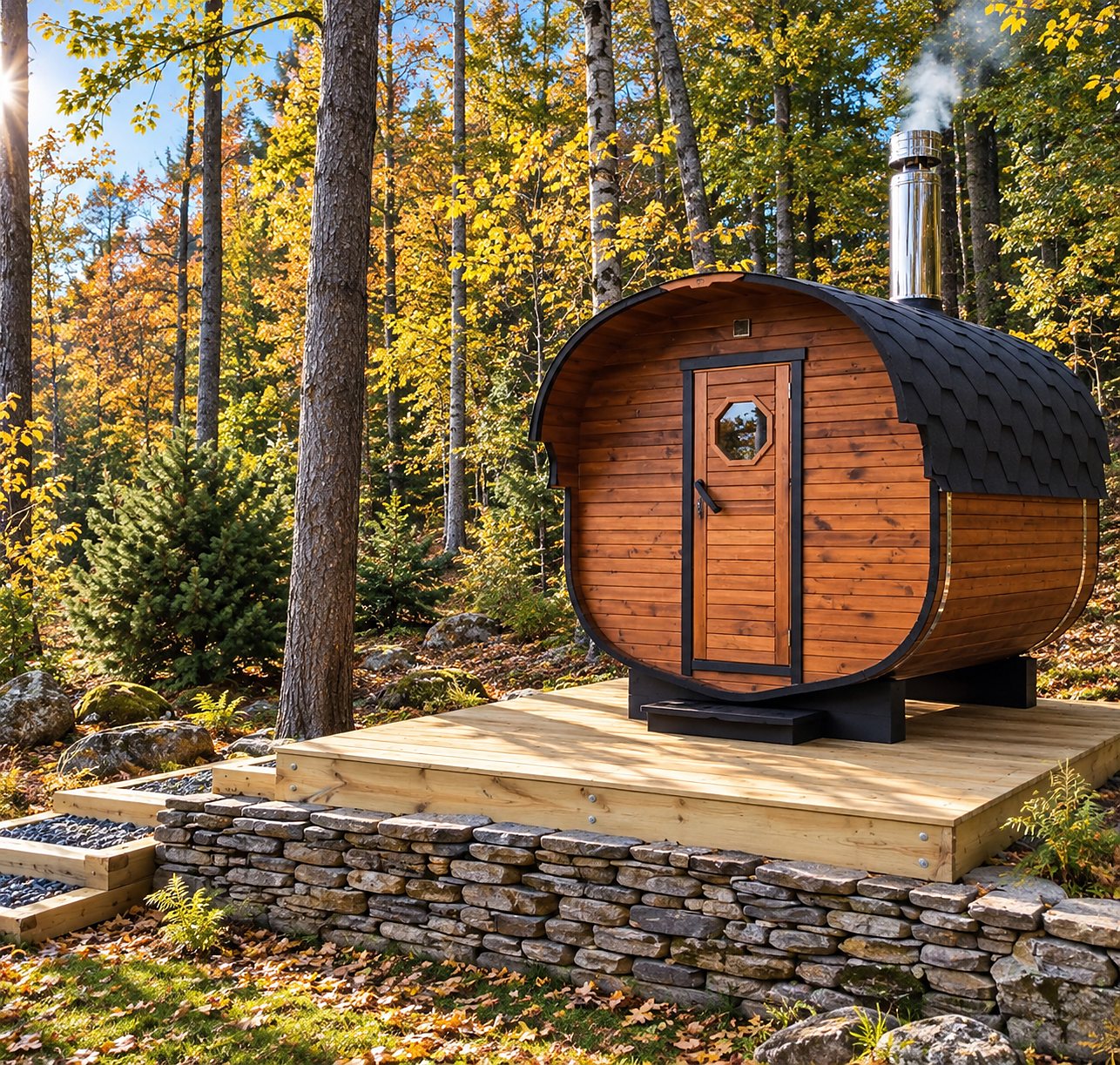
Where the flue passes through, you need the proper insulated element, a roof or wall pass-through with insulation. Not just a pipe in a hole cut in the wood, even though you find that on the cheapest builds.
The clearance to timber specified by the stove and chimney manufacturers must be kept. This is not a recommendation but a safety condition: wood in contact with a hot pipe slowly chars and can ignite years later at a lower temperature than you would expect.
Our kits come with a step-by-step manual, but the flue is the one part where it is worth bringing in a professional. A qualified stove installer or our assembly crew can fit it for you.
Have a wood stove checked by a qualified chimney sweep or stove installer before first use. They are best placed to give reliable advice on clearances and chimney height on site, and local rules on solid-fuel appliances can differ, so ask your local council what applies in your area.
The higher the chimney goes, the better the draught and the less smoke lingers at ground level.
A taller chimney also means less reason for a quarrel with the neighbours. An extra length of pipe costs little and solves most smoke problems before they begin.
A mesh at the top of the chimney. It is needed above all when the sauna stands close to trees, dry grass, a hedge or timber buildings.
It costs little. In wooded areas, treat it as essential equipment, not an option.
At least once a year, before the season rather than in the middle of it. Soot builds up in a sauna chimney faster than in a fireplace, because the stove is fired briefly and very hard and is often not yet warmed through when you light it.
If you burn damper wood, clean it more often. Soot from wet wood is tarry and builds up at a speed that surprises people.
Soot marks around the point where the flue passes through wall or roof. A sign of a leak; act immediately.
Loose pipe joints after a season of temperature swings. Pipes expand and joints can come apart.
Smoke that comes back when you light the stove. Usually a blocked chimney or too little draught, sometimes wind pushing into the chimney in an unfavourable position.
Do not cap the chimney in summer “to keep the rain out”. The moisture stays inside and speeds up corrosion.
Do not run the flue through the wall directly under the roof overhang. The smoke collects beneath it and settles on the covering.
Do not shorten the chimney to make it look neater. Draught matters more than proportions.
Name and phone number — we will message you on WhatsApp, help you pick the size and price it with delivery to your address.
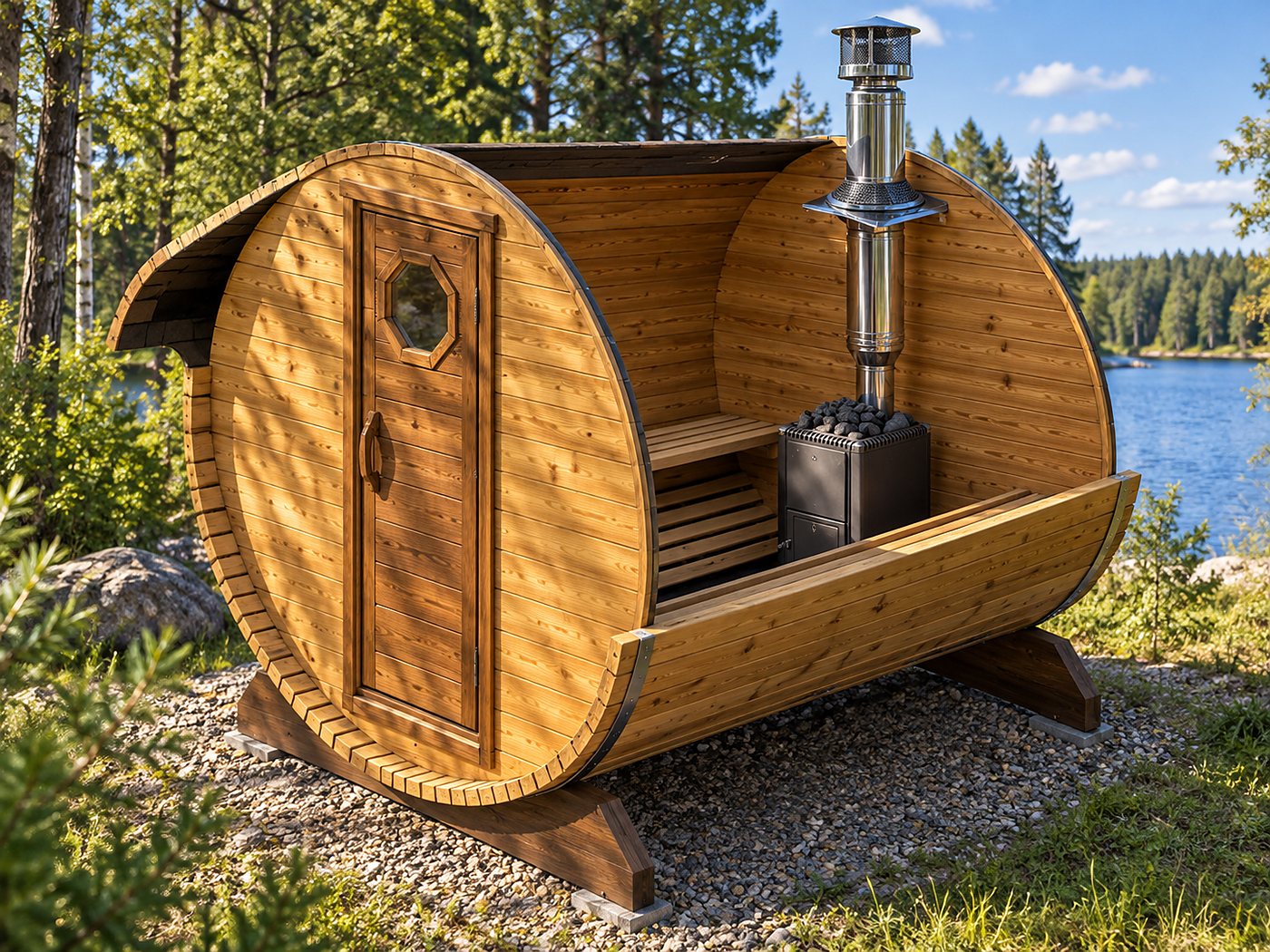
Lighting a wood-fired stove in a barrel sauna: preparation, stacking logs, air supply, topping up and the mistakes that cost you temperature.
Read →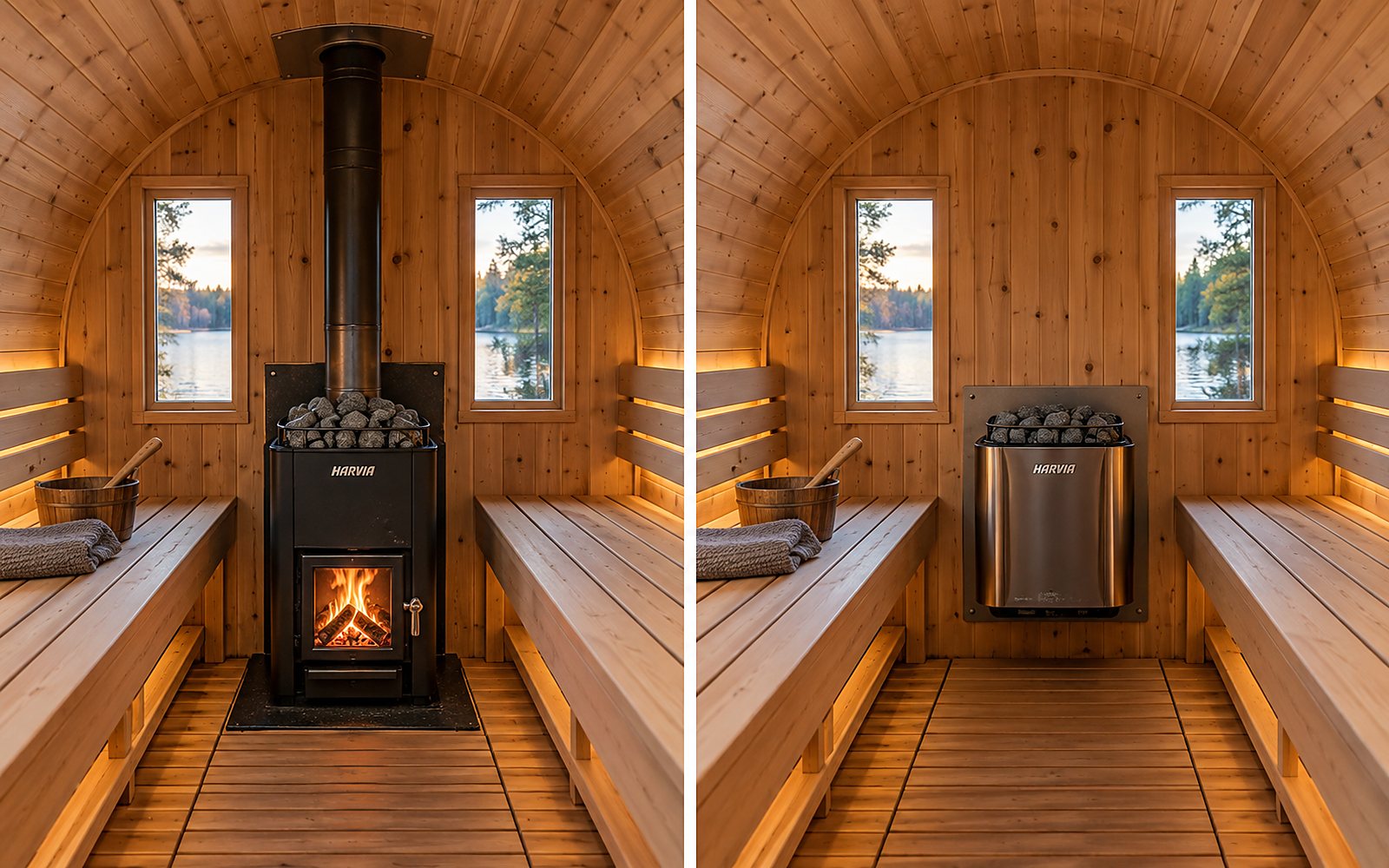
Wood-burning or electric stove for your garden sauna? Heat character, running costs, power supply, safety and which to choose for home, holiday home or let.
Read →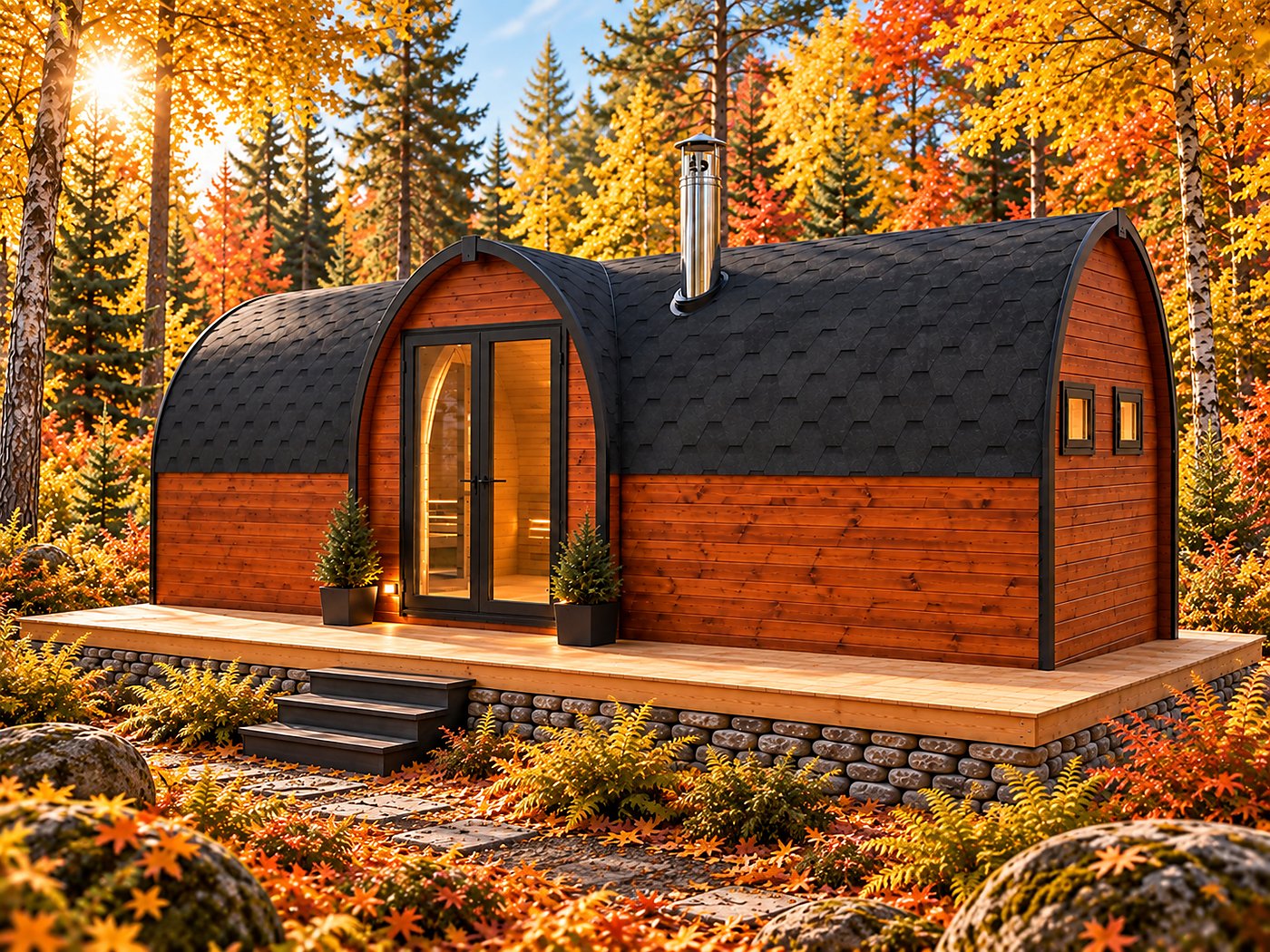
A simple care routine for a barrel sauna: after every use, once a season and yearly wood treatment, plus what never to do, such as pressure washing or varnish.
Read →Name and phone number — we will message you on WhatsApp, help you pick the size and price it with delivery to your address.
Cookies
Besides the essential ones, we use cookies for visit statistics and measuring ad performance. We turn them on only with your consent. Privacy.